Positive Discipline: How to Build Confidence, Responsibility & Self-Control in Children
What Is Positive Discipline? (And What It Isn't)
Positive discipline is an approach that teaches a child what to do differently next time, instead of simply punishing them for what they did wrong this time. It is rooted in decades of child development research showing that children learn self-control and responsibility far more reliably from firm, predictable boundaries paired with respect, than from fear, shouting, or physical punishment.
It's important to be clear about what positive discipline is not. It is not permissive parenting, and it is not the absence of rules or consequences. A child still faces real, firm consequences for crossing a boundary — the difference is in how that boundary is held: calmly, consistently, and without shame, so the child's behaviour changes without their confidence being damaged in the process.

"Positive discipline isn't about being softer on behaviour — it's about being firmer on the boundary and gentler on the child, at the same time."
Confidence, responsibility, and self-control form the foundation of positive discipline
Effective discipline corrects behaviour without shaming or humiliating the child
Boundaries stay non-negotiable — positive discipline is not permissive parenting
Children internalise self-control instead of only obeying when watched
6 Positive Discipline Strategies That Build Confidence, Responsibility & Self-Control
Each of these strategies targets one or more of the three core outcomes every parent wants — here's exactly how each one works, and what it builds in your child over time.
Connection Before Correction
Natural & Logical Consequences
Calm, Consistent Boundaries
Problem-Solving Together
Positive Reinforcement Over Punishment
Modelling Emotional Regulation
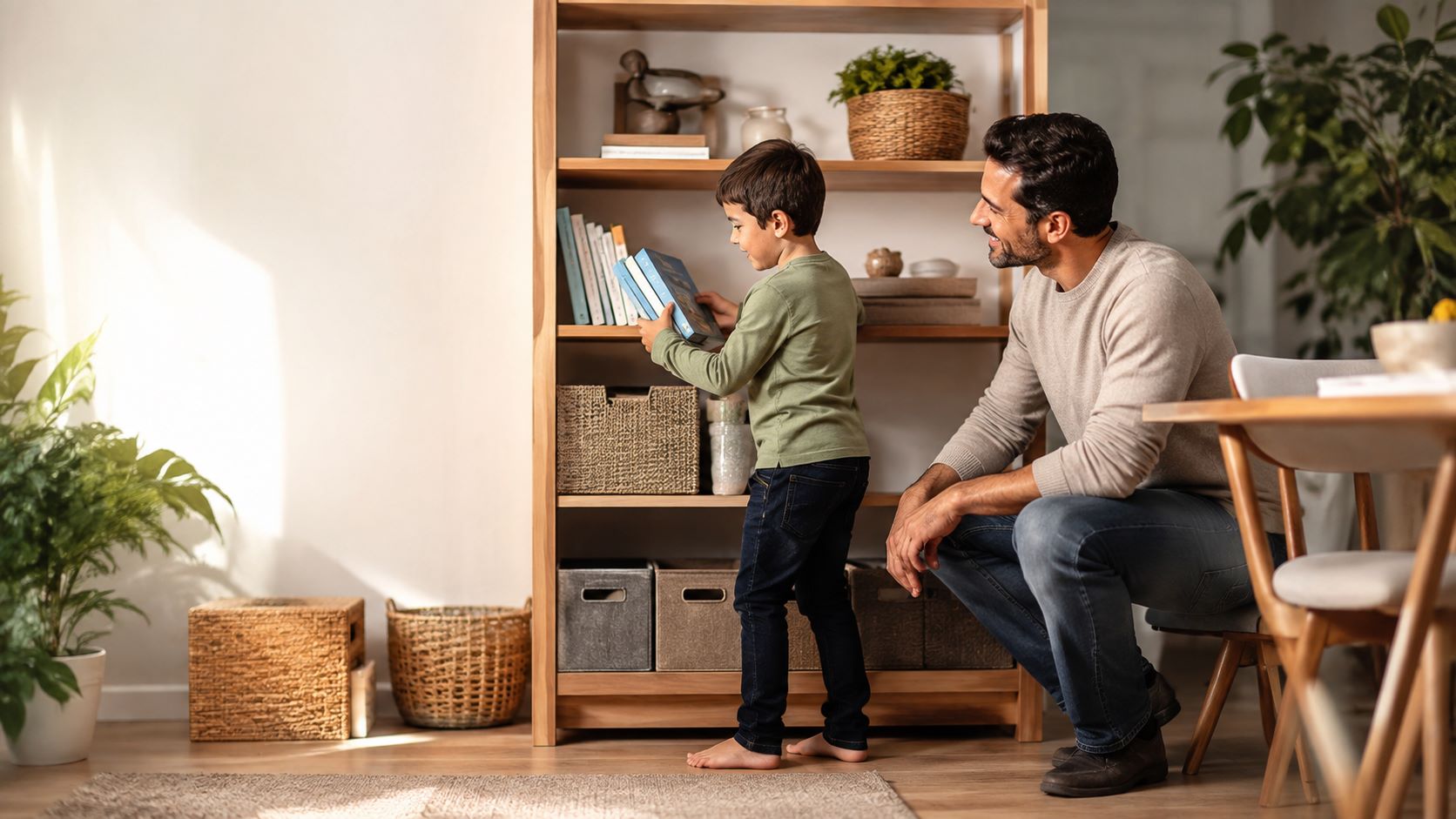
8 Simple Ways to Practise Positive Discipline Every Day
Knowing the strategies is one thing — making them a daily habit is another. These small, repeatable actions are what actually change behaviour over weeks and months, and pair well with the focus-building habits in our guide on improving your child's concentration and focus while studying.
Set Clear Rules Before the Moment, Not During It
Agree on expectations calmly ahead of time — before a car ride, a store visit, or screen time — so the boundary is already known rather than negotiated mid-conflict.
Give a Warning, Then Follow Through
One clear, calm warning is fair. Repeated warnings without any consequence teach a child that the rule is optional until you finally lose patience.
Separate the Behaviour From the Child
Correct "that was an unkind thing to say" rather than "you're a bad boy," so the child learns the behaviour was wrong without believing they are.
Give Age-Appropriate Responsibilities
A daily task — feeding a pet, packing their own bag, tidying their shelf — builds a genuine sense of contribution and ownership that no lecture can replicate.
Offer Limited Choices, Not Open Demands
"Do you want to brush your teeth before or after your story?" gives a child real control within a boundary that still isn't up for debate.
Take a Pause Before You Respond in Anger
A short pause before responding to frustrating behaviour prevents reactive punishments you may later regret, and models the very self-control you want your child to learn.
Debrief After the Storm Has Passed
Once everyone is calm, briefly revisit what happened and what could be different next time — children absorb far less during the heat of the moment itself.
Stay Consistent Across Both Parents
When both parents hold the same boundary the same way, children stop testing which adult will bend, and the rule is learned far faster.
Signs Your Current Discipline Approach May Need Adjusting
Discipline that isn't working rarely announces itself all at once — it shows up in small, repeated patterns first. Watch for:
Quick Reference: Do's & Don'ts of Positive Discipline
| Do | Don't |
|---|---|
| Address the behaviour calmly and specifically | Label the child as "naughty," "lazy," or "bad" |
| Use consequences logically connected to the choice | Punish with an unrelated privilege out of anger |
| Stay consistent every single time | Enforce the rule only when you're already frustrated |
| Acknowledge feelings before correcting behaviour | Dismiss emotions with "stop crying" or "you're fine" |
| Give a genuine chance to make it right | Bring up past mistakes repeatedly to make a point |
| Praise specific good choices when you see them | Only give attention when something goes wrong |
How Vedant International School Nurtures Confidence, Responsibility & Self-Control
As one of the best CBSE schools in Ahmedabad, Vedant International School holds consistent, respectful classroom boundaries and dedicated value education, so the positive discipline practised at home is reinforced, not contradicted, during the school day.
Value Education Sessions
Structured classroom time dedicated to responsibility, respect, and self-discipline, not just academic subjects.
Individual Mentoring
Educators address behaviour calmly and privately, protecting each student's confidence and dignity.
Consistent Classroom Culture
Clear, fair, and predictable boundaries applied the same way for every student, every day.
Frequently Asked Questions
Conclusion
Positive discipline is not the easier path, and it is not the permissive one — it is the path that respects a child enough to hold a firm boundary without breaking their spirit to enforce it. Practised consistently, it quietly builds the three things every parent hopes for: a child who believes in themselves, who takes genuine ownership of their choices, and who can manage their own impulses long after the parent has left the room.
At Vedant International School, we work alongside parents to hold that same standard during the school day, so the values built at home and the values built at school reinforce each other, rather than pulling a child in two directions.